

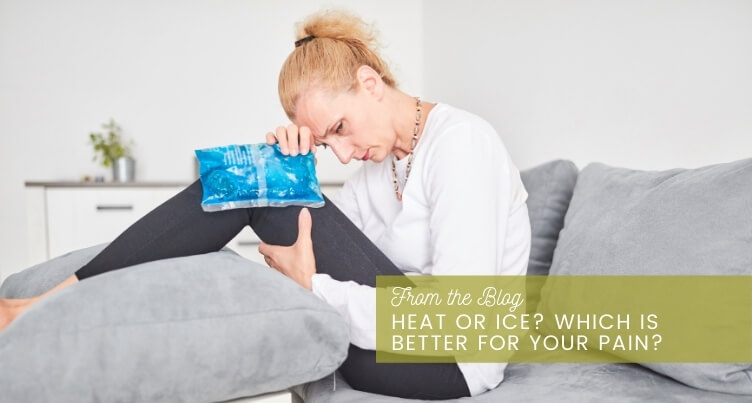
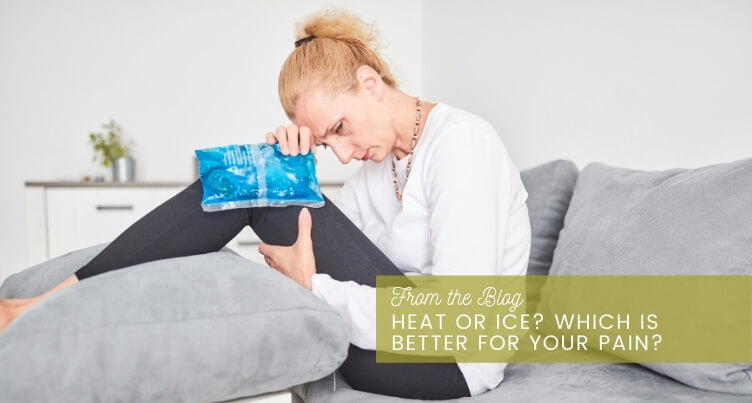
Have you ever found yourself with an ache or pain wondering, “Should I apply heat or ice?” Here we’ll explain which situations call for heat and which call for ice, as well as what to do if neither is helping.
First off, a general rule of thumb is to use ice for recent, acute injuries that are less than 6 weeks old and heat for long-term injuries that have been persisting for over 6 weeks. The reason is ice constricts blood vessels, numbing pain and reducing inflammation, which is what you need for a new injury. Heat, on the other hand, increases blood flow to relax tight muscles and aching joints. Heat can increase inflammation in certain injuries, so give us a call if you are unsure which to use for your particular injury.
Heat is often best for:
- Arthritis
- Headaches caused by neck spasms
- Muscle spasms
- Tendinosis
- Relieving stiffness of strains and sprains after inflammation has resolved
Ice is best for:
- New injuries
- Strains and sprains
- Sports injuries
- Throbbing headaches
- Gout flare-ups
- Tendinitis (commonly in the shoulder, elbow, knee, and wrist)
Applying Heat and Ice
A bag of frozen peas or corn makes a great ice pack that molds to the injured area. Conversely, a warm bath, heat wrap, or heating pad can be used for heat therapy.
Apply heat or ice for 20 minutes at a time, taking a break of at least 20 minutes in between sessions. Remove the heat or ice if it becomes uncomfortable and do not apply ice directly to the skin, wrap it in a lightweight cloth or towel.
When the Pain Isn’t Improving
If at-home heat or ice therapy isn’t improving your condition, give us a call. We’ll get you in for a visit to see if we can help.